Brazil is the second market TikTok Shop opened in Latin America, and it arrived in a country already primed for social, conversational buying. A huge mobile-first population, deep TikTok adoption, and a culture comfortable buying through back-and-forth all combined into a market that moved fast from day one. TikTok Shop officially launched in Brazil in May 2025, and within roughly three months its monthly GMV had climbed to about US$46.1 million in August 2025 — a signal that TikTok live shopping in Brazil has crossed from novelty into a real channel.
This is the pillar guide for the Brazil cluster. It covers the opportunity, how live shopping actually works on the ground here, what running it well takes, and how to start — with links to deeper, narrower guides where you need them.
Key takeaways
- TikTok Shop launched in Brazil in May 2025 and is live and operating — monthly GMV reached roughly US$46.1M by August 2025, with live streaming already about 23% of that GMV.
- The audience is large: TikTok reaches about 91.7M Brazilian adults, and Brazil's social commerce market is projected to grow from ~US$15.6B in 2025 to ~US$55.7B by 2030.
- A US brand can't open a TikTok Shop Brazil storefront directly — the marketplace is gated to locally-registered (CNPJ) sellers, so brands reach Brazilians cross-border or through a local partner.
- Streams that convert are Portuguese-first and hosted by community-native creators — translation isn't localization — and the hard part is operations, not the stream itself.
Why is Brazil a standout live commerce market?
The platform numbers moved fast from launch. After TikTok Shop launched in Brazil in May 2025, GMV grew roughly 25x — from about US$1M to US$25.7M — within its first three months, then reached about US$46.1M in August 2025, nearly double July. The channel mix matters as much as the headline: in August 2025, the shop tab was about 50% of GMV, short video about 25.7%, and live streaming about 23.4%. Live is already doing roughly a quarter of the work, this early.
The audience is genuinely large. TikTok reaches about 91.7 million Brazilian adults, 56.4% of the adult population, in a country with 183M internet users. That's one of the biggest TikTok audiences in the world.
The broader market is compounding. Brazil's social commerce market is projected to grow from roughly US$15.6 billion in 2025 to about US$55.7 billion by 2030, a CAGR near 29%. Live commerce specifically is forecast to expand from about US$2.32 billion in 2024 at a ~34% CAGR through 2033. Brazil is frequently cited as one of the largest live-commerce markets, though it still represents only about 1.8% of the global live-commerce market — a useful reality check against the hype. The trajectory is the story, not the current absolute size.
The result is a market where the audience is ready before most brands are. That gap — demand outpacing brand readiness — is the window. The brands that move while the field is still thin compound an advantage that gets more expensive to buy later. For a deeper read on the broader dynamics, see our guide to live selling in Brazil.
How does TikTok live shopping work in Brazil?
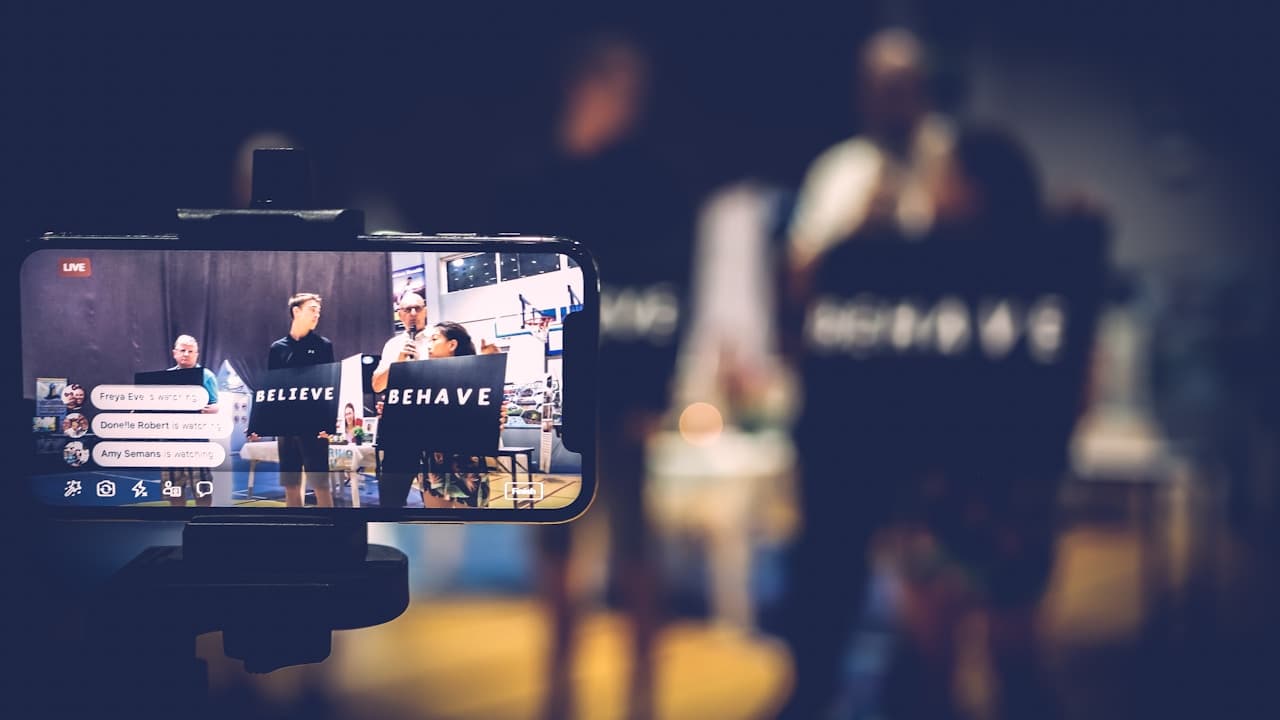
The core mechanic is the same as anywhere: a host goes live, demonstrates products in real time, answers questions in the comments, and shoppers check out without leaving the stream. TikTok Shop in Brazil bundles a shop tab, shoppable video, LIVE shopping, and an affiliate program where creators typically need 5,000+ followers to access the product marketplace and sellers commonly set commissions of 5–50%.
What differs in Brazil is the texture — the language, the price framing, the creators, and the trust signals that make a stream convert.
Streams that work in Brazil tend to be:
- Portuguese-first, in the natural Brazilian Portuguese your audience actually speaks — not translated general-market scripts.
- Hosted by community-native creators who feel like a trusted friend recommending a product, not a spokesperson reading copy.
- Built around real demonstration — showing the product used, worn, or tested, with honest answers to live questions.
It's worth understanding the engine underneath the format. TikTok runs on discovery: people don't arrive searching for your SKU, they stumble into it mid-scroll because the content is good. A live stream is discovery and checkout collapsed into one moment, which is why content quality and host credibility matter more than catalog depth. China — the most mature live-commerce market — offers a preview of where formats go: Douyin's dual-host live format lifted average sessions from 29 to 41 minutes, and roughly 70% of its e-commerce livestreams are now merchant-run rather than independent influencer streams — a maturity signal worth watching.
What does running it well actually take?
Cultural fluency beats polish. The most common mistake is treating Brazil as a translation exercise — taking a U.S. live shopping playbook, swapping the language, and wondering why it underperforms. Live commerce is a conversation, and authenticity is immediately obvious. References, humor, price sensitivity, and payment expectations matter more than production value.
You can't sell on TikTok Shop Brazil directly. This is the structural fact every foreign brand has to plan around. TikTok Shop Brazil launched invitation-only for local sellers, and sellers must have a Brazilian CNPJ or register as an MEI. A US brand cannot open a TikTok Shop Brazil storefront on its own. The realistic paths are (a) cross-border parcel shipping to Brazilian buyers, or (b) selling through a Brazil-registered local partner or seller-of-record. (Separately, TikTok has filed payments/credit license requests with Brazil's Central Bank — that's fintech, not a block on TikTok Shop commerce, and shouldn't be conflated with it.)
Operations are the real workload. A great stream with broken fulfillment is a refund machine. There's no fully-managed fulfillment in Brazil — sellers handle their own shipping and customs. TikTok Shop setup, local logistics, payments, creator sourcing, and compliance are each real work, and they're where most brands stall.
Cross-border adds a tax layer. If you're shipping into Brazil from the U.S., the import math matters. A May 2026 measure (Medida Provisória nº 1.357) revoked the "taxa das blusinhas", zeroing the 20% federal import tax on purchases up to US$50 by individuals on compliant platforms. But it's temporary: the measure is valid 120 days and needs Congress to become law, with new federal taxation on sub-US$50 orders slated for January 2027 — it's a window, not a permanent break. Above US$50, a 60% federal import tax applies, and state ICMS (~17–20%) applies on top. Joining a Programa Remessa Conforme platform gets you simplified customs clearance and the current exemption. We cover this path in detail in how to sell products in Brazil from the US.
Creators are a roster, not a hire. No single host carries a market. The brands that scale build a bench of community-native creators and learn which formats and personalities convert for which products. A skincare line and a power-tool brand need different hosts, different demos, and different price framing. Our guide to TikTok creators in Brazil goes deeper on sourcing and vetting.
How do you get started?
- Decide your route to market. Because TikTok Shop Brazil is CNPJ-gated, settle the cross-border vs. local-partner question first — it shapes everything downstream.
- Define the offer for the market. Price, bundles, and promotions should reflect local expectations and the real landed cost after ICMS and any federal import tax, not a direct currency conversion.
- Build a creator roster. Start with a small set of community-native, Portuguese-first hosts and learn which formats convert before you scale.
- Get the operational backbone right. Storefront access, fulfillment, returns, and payments need to work before you scale spend.
- Apply the format fundamentals. Portuguese-first scripting, honest demos, and live Q&A — the best practices for live shopping on TikTok in Brazil are where the conversion lives.
For most brands the question becomes build-vs-partner. If you'd rather not assemble creators, fulfillment, and a compliant storefront from scratch, compare your options in our roundup of the top agencies for live shopping on TikTok in Brazil, or read how to choose the right agency partner.
How WABU fits
WABU is a full-service live commerce operation, run from our Miami hub, with a dedicated Hispanic and Latin American vertical — including cross-border into Brazil. That means Portuguese-first, community-native creators, culturally relevant content, and end-to-end TikTok Shop operations from creator sourcing through payouts, so the GMV you generate is GMV you keep. We help brands navigate the CNPJ-gated storefront, cross-border logistics, and the shifting import-tax landscape rather than learning it on your budget.
If TikTok live shopping in Brazil is part of your growth plan, book a strategy session.
Frequently asked questions
Is TikTok Shop available in Brazil?
Yes. TikTok Shop officially launched in Brazil in May 2025 — its second Latin American market after Mexico — and it is live and operating. Monthly GMV reached about US$46.1 million by August 2025, with live streaming already accounting for roughly 23% of that. It launched invitation-only for local sellers, so category eligibility and access evolve; confirm current status for your products.
Can a US brand open a TikTok Shop in Brazil?
Not directly. TikTok Shop Brazil is built for locally-registered sellers and requires a Brazilian CNPJ (or MEI registration), so a US brand cannot open a Brazil storefront on its own. The practical paths are shipping cross-border to Brazilian buyers or selling through a Brazil-registered local partner or seller-of-record. Many brands work with an in-market operator to bridge this.
Do I need Portuguese-speaking hosts for live shopping in Brazil?
Yes. The most effective streams are Portuguese-first and hosted by creators who are part of the local community. Translated general-market scripts consistently underperform because live commerce is a real-time conversation where authenticity is obvious. Translation is not localization.
What taxes apply when shipping to Brazil from the US?
A May 2026 measure (Medida Provisória nº 1.357) temporarily zeroed the federal import tax on purchases up to US$50 by individuals on compliant Remessa Conforme platforms, but it needs Congress to become permanent and new taxation is slated for January 2027. Orders above US$50 face a 60% federal import tax, and state ICMS of roughly 17–20% applies on top. Treat the exemption as a window, not a permanent break, and budget the landed cost accordingly.
How big is the opportunity for live shopping in Brazil?
Large and compounding. TikTok reaches about 91.7 million Brazilian adults, and Brazil's social commerce market is projected to grow from roughly US$15.6 billion in 2025 to about US$55.7 billion by 2030. Within TikTok Shop specifically, monthly GMV reached about US$46.1 million by August 2025, with live streaming driving roughly a quarter of it that early.